Sexual Coercion
In this post, I’m revisiting some ideas I’ve previously shared, but from a new angle. I will be direct. After all, Doctrine and Covenants Section 132 is the foundation for this doctrine of “having many wives and concubines.” From my reading, that section is anything but discreet.
This platform may censor me for using the word “sexual” too often, so I want to clarify that terms like consent, coercion, assault, submission, victims, or violation should always be preceded by the word “sexual”.
As you might expect, this post, much like D&C 132, is not suitable for children.
Conscience, the Light of Christ, & Gut Instincts
The Church’s Guide to the Scriptures says: “One manifestation of the light of Christ is conscience, which helps a person choose between right and wrong.” I’d like to introduce another potential manifestation—the ability to recognize danger, which I’ll call gut instinct.
We see these manifestations whenever plural marriage is first considered.
On the Church's website, it states that Lucy Walker recalled her inner turmoil when she was first asked to be a plural wife. Brigham Young said he desired the grave when this doctrine was revealed to him. Everyone is uncomfortable with the idea of this principle.
Still, is the mental anguish Brigham suffered comparable to what Lucy suffered? When confronting this doctrine, do men and women experience their conscience and gut instincts differently? Women may describe their reactions to this principle and the polygamy revelation that supports it as distressing or traumatic. Why is that?
From my research, I’ve concluded that the principle of plural marriage is not divine. The evidence that points to this doctrine not being from God lies within the supposed revelation known as D&C 132.
Bethany Brady Spalding, on a Faith Matters podcast, said some valuable things.
“…to be forced to have sex with someone that you do not want to have sex with is harrowing, it’s hellacious, it’s harmful. And we do an extraordinary amount of damage when we try to frame it as godly. I think that’s what’s happening in this Section.”
Bethany brought clarity to something I had overlooked, probably because I’ve never experienced sexual assault or abuse. Until I heard her, no one had explained 132 with words that were clear enough for me to understand. She put a name to what I, and likely other women, have been warned about.
Whatever you call it— assault, coercion, violation, or another word that might get me censored…it’s in the pages of D&C 132. While 132 is just words on a page and not an act of assault, the text appears to justify such actions. For this reason, many women may see 132 as not only wrong but also dangerous.
Section 132 is just words on a page; it is not an act of assault. Yet its language appears to rationalize such actions, which is why women may experience 132 as not merely wrong, but dangerous.
Women Are the Unconsenting Victims
As Bethany said, “…to be forced to have sex with someone that you do not want to have sex with is harrowing, it’s hellacious, it’s harmful.” This would not be Brigham’s destiny with this doctrine, but it could have been Lucy’s.
In 132, men are entitled to women’s bodies. Women’s consent is absent from what will befall them sexually, reducing them to the victims within its pages.
The consent of the sexual victims, women, is absent in the pages of 132
Women Need the Protection
I believe polygamy harms those who most need the protection—women. I reached this conclusion partly because, as a teenager in the late 60s, church lessons suggested that women were the gatekeepers of sexual purity. While premarital sex was a sin for both genders, women were seen as more likely to feel remorse because they would instinctively place more value on this act. Today, these views may seem outdated.
But they would not have been outdated in the 1800s. During the Victorian era, women were indeed the gatekeepers of sexual purity. Yet early Latter-day Saint women faced a conflict between their Victorian values and their polygamous reality. To make it worse, they were presented with the sexually coercive polygamy revelation that was the basis for their lifestyle.
Whether they recognized it or not, these women likely experienced a unique form of dissonance and trauma. Their gut instincts may have warned them of danger and assault, but they were led to believe that God sanctioned their suffering. Concealed from them was the truth that God’s laws protect women and their unique, sensitive feelings about intimacy. While 132 may break their spirits, God’s true laws do not.
Women have unique, sensitive feelings about intimacy, yet protection is withheld from the very gender that needs it most. While 132 may break their spirits, God’s true laws do not.
No Big Deal
I recently read a book called Chasing Love: Sex, Love, & Relationships in a Confused Culture, which I plan to recommend for my young adult grandchildren. As the author covers this topic, his focus is on Christ and his mercy, but relative to the polygamy subject, something stood out. He wrote,
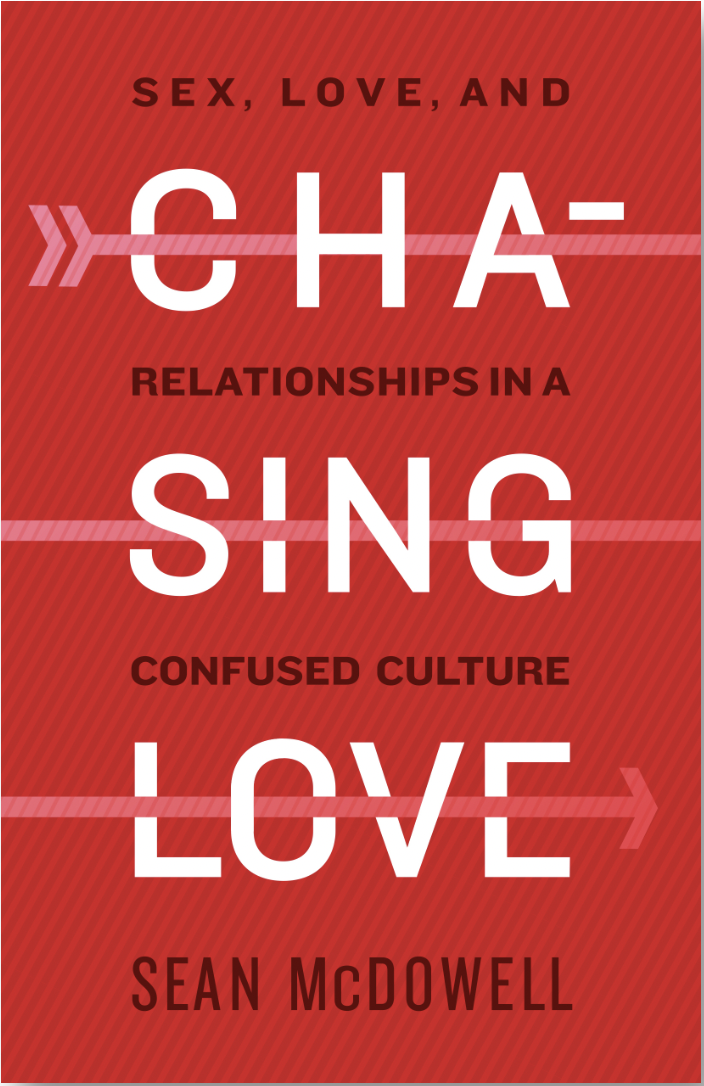
“At the heart of the sexual revolution has been the idea that sex is not a big deal. It’s simply a recreational activity for consenting adults, like any other. But I think we know better….everyone knows there’s something inherently important, vulnerable, and powerful happening in sexual intimacy….we all know that it’s a big deal.”
Despite the 60s free-love culture, I’m grateful that the church presented sex as a big deal to me in the 60s. It is.
Those in the Victorian era believed sex was a big deal, and as the gatekeepers of sexual purity, it was an even bigger deal for women. On the other hand, I would suggest that 132 views sex as no big deal, and especially not a big deal for women.
As if they’re not in the room, 132 discusses how women will be used sexually. They have no say in this matter. 132 callously gives, takes, destroys, and forces women to accept a hellish sexual fate. To add to the hell, they are forced to accept their husband’s adultery because it is labeled godly. Without asking their permission, 132 coerces women into sexual submission.
132 views sex as no big deal, and especially not a big deal for women. Without asking their permission, 132 forces women into submission for what will be a hellish sexual fate. To add to the hell, women must accept their husband’s adultery because it is labeled divine.
Labels for Women Only
In Section 132, men are referred to simply as "men," with "husband" appearing only once. In contrast, women are designated solely as wives, concubines, and virgins—this is their entire identity. The labels of concubines and virgins indicate judgments regarding their social and sexual status. Our Savior, who disregards social hierarchies and extends grace to sinners, is missing from these definitions.
Beyond being wives, women are labeled concubines and virgins, reflecting judgments about their social and sexual standing. Our Savior, who shows no partiality and offers grace to all, is absent from these characterizations.
Hagar: the Fitting Prototype
It is fitting that Hagar serves as the doctrinal foundation for 132’s doctrine of having multiple wives and concubines. She represents the prototype of a plural wife or concubine—a slave, who has no choice and is forced to have sex with an old man.
As you’ll recall, God promised Abram an heir. But Sarai, as an old woman, lacked faith in this promise. Sarai told Abram to use her maid as a surrogate, hoping to have children through her property. Abram agreed to his wife’s request. Hagar conceived but ran away when Sarai treated her harshly. The angel tells Hagar to return to her mistress— the female equivalent of a master. Notably, the angel did not tell Hagar to return to her husband, Abram. While she might be referred to as a wife, Hagar remains the low-status property of Sarai, not even under Abram’s authority.
Hagar is our example-- a slave who can be used sexually as a surrogate with no consent.
Like Hagar’s challenging story, other Old Testament accounts of polygamy are also presented in a negative light. I believe that an honest retelling of many latter-day polygamy stories would yield similar conclusions.
Hagar is the doctrinal justification for 132’s plural marriage system. As a slave, she is forced to have sex with an older man, transforming a marriage into a dysfunctional, plural threesome.
Hagar is Seen and Loved
So Hagar gives us only a depressing story, right? Actually no. Something beautiful about Hagar’s story is missing from the pages of 132. Hagar fled when Sarai treated her harshly, and the angel instructed her to return to her mistress. Later, after Ishmael’s birth, Hagar fled a second time. Again, an angel found her—but this time she was not sent back to an abusive situation.
God’s angels appeared to Hagar twice. Hagar declared that God sees her, and she saw Him. God beheld her low-status, vulnerable circumstances and cared for her. She should stand as an example of God’s compassion and love. Yet none of this appears in the pages of D&C 132.
Instead, Hagar’s sacred encounters are stripped away, and she becomes merely the doctrinal justification for the chapter’s marriage system—an example of a plural wife who can be given by her owner to be used sexually for the purpose of producing a child. This is her sole identity within 132—not the woman whom God saw, protected, and saved.
Hagar was visited by an angel twice. She acknowledges that God sees her. Missing from 132 is God’s compassion and love for Hagar.
Not Commanded and Not Eternal
There are key differences between polygamy stories in the Old Testament and those in latter-day times. While polygamy was part of Old Testament customs, it wasn't commanded by God; rather, it was a choice made by flawed humans. It is only in Section 132 that polygamy is explicitly commanded.
Another distinction exists: Hagar and other Old Testament wives lived within a coercive system that was all they knew, but they weren't compelled to see it as their eternal fate. The Bible not only avoids commanding polygamy but also never speaks of eternal plural marriage. Only Section 132, as if it’s not harmful enough, introduces the concept of eternal coercion.
132 demands the eternal sacrifice of something that is a big deal to women.
Aside from 132, polygamy is not commanded in scripture and is never framed as an eternal practice. Only 132, as if its not harmful enough, presents the idea of eternal sexual coercion.
An Updated Comparison
Since 132 uses the sacrifice of Isaac as a comparison, I contrasted in another post Abraham’s obedience with a Church member’s obedience.

Abraham never sacrificed Isaac, which is why it is called the binding of Isaac in Hebrew. However,
The lives, happiness, and, I’ll now add chastity, conscience, and consent of women are sacrificed in 132.
Unlike with Isaac’s binding, women in 132 actually sacrifice these things that are a big deal to them eternally.
Isaac was never sacrificed—yet 132 demands the sacrifice of women’s chastity, conscience, and consent, and requires it eternally.
God’s Name in Vain
As I’ve expressed in other videos, putting God’s name to plural marriage is taking His name in vain. I will now say that putting God’s name to sexual coercion is taking God’s name in vain. Or as Bethany said, “We do damage when we try to frame this as Godly.”
Romans 2: 14-15 For when the Gentiles, which have not the law, do by nature the things contained in the law, these, having not the law, are a law unto themselves: Which shew the work of the law written in their hearts, their conscience also bearing witness, and their thoughts the mean while accusing or else excusing one another
According to Paul, God can justly condemn people for sin because the “law is written on their hearts” Not the Mosaic Law, but God’s absolute and universal moral law that is manifest to everyone. Initially at least, most seem to know that the text of 132 does not align with God’s universal moral law.
132 is coercion in print. 132 pins coercion on God. God is good and wants goodness from His children, so sexual coercion is NOT of god, rather it’s the smoking gun that tells us 132 is NOT of god.
132 is sexual coercion in print. It makes coercion godly. Coercion is NOT of God, rather it is the smoking gun that tells us 132 is NOT of God.
No One Wants to Touch This
Some may think my conclusions are an overreaction. In the Faith Matters podcast, Bethany says she checked her feelings against the journal entry of one of her ancestors. As a convert, I don’t have polygamous ancestors’ journals to check. Despite that, I have read the writings of early polygamous women that confirm my suspicions.
Perhaps another way to measure my conclusions is to consider how the Church handles D&C 132. We recently had a Sunday School lesson on this section, and I’ll wager that not one classroom in the entire worldwide church read or discussed any of the more challenging verses from 132. No one with a conscience wants to confront the coercive sexual content found in that section. As Bethany said:
“…to be forced to have sex with someone that you do not want to have sex with is harrowing, it’s hellacious, it’s harmful. And we do an extraordinary amount of damage when we try to frame it as godly. I think that’s what’s happening in this Section.”
Do those who advocate for Section 132 know what is happening in this section?
When D&C 132 was the subject of a Sunday School lesson, I’ll wager that no classroom in the entire worldwide Church covered any of the difficult verses. No one with a conscience wants to confront the coercive sexual content found in that section.
In my opinion, it’s past time to rescind this harmful and dangerous doctrine.